
Categories
Vanilla 1.1.8 is a product of Lussumo. More Information: Documentation, Community Support.
Want to take part in these discussions? If you have an account, sign in now.
If you don't have an account, apply for one now.
-
-
CommentAuthorBrandonP
- CommentTimeSep 5th 2009
Below is an essay I wrote for my English class earlier this year. It compares and contrasts life in 200,000 BC (when modern humans first evolved) with life in the modern day.
###
According to the latest paleoanthropological and genetic research, our species, Homo sapiens, first appeared on the plains of Africa some 200,000 years ago. Since then, we as a species have accomplished a lot. We’ve explored most of our planet, our solar system, and even some regions of outer space. We’ve constructed towering monuments, bustling cities, and vast nations. We’ve filled entire libraries with the knowledge we’ve gained about ourselves and our surroundings, and we’ve used that knowledge to design and invent the most intricate technologies.
Thanks to technological change, life is in many respects much easier now than it was 200,000 years ago. No longer do we have to run across the savanna chucking spears at wildebeests to get our food; now we can buy pre-packaged, refrigerated meat at grocery stores. No longer do we fear being hunted by lions, leopards, hyenas, or other predators of the African wilds; most of us now live in secure neighborhoods with armed policemen to protect us. And no longer is death certain whenever we get sick; thanks to modern medicine, diseases that would have killed us in the past are now merely annoying.
I am happy for all these changes, yet at the same time, I wonder if life 200,000 years ago wasn’t worse in every single way than our lives now. Perhaps prehistoric people enjoyed certain luxuries that we don’t today.
For instance, since there were no businesses or schools back in 200,000 BC, people wouldn’t have had the busy schedules they do now. They wouldn’t have any business meetings to attend or homework to do. Once they had gathered enough food, they probably would have had found more time for leisure or bonding with their children than we find now.
People back in 200,000 BC also wouldn’t have to worry about environmental devastation to the extent that we in modern times do. They wouldn’t have possessed the technological capacity to devastate whole acres of forests, smog up the sky, or clog the rivers and oceans up with sewage. Instead, they would have enjoyed lush vistas teeming with wildlife, blue skies, starry nights, and relatively clean water with lots of fish. A third benefit to prehistoric life would have been the amount of exercise our ancestors would have gotten. Running across the savanna chucking spears at wildebeests may not be the most convenient way of getting food, as I said before, but it certainly counts as exercise. So do migrating from watering hole to watering hole and running away from predators. We wouldn’t have lived sedentary lives in permanent houses eating Oreos and pizza while amusing ourselves on the Internet. Instead we would have been outdoors all the time. We must have been reasonably fit back then.
The final benefit to life back in 200,000 BC, and perhaps the biggest one, would be the lack of materialism. Today, we tend to equate happiness with financial prosperity and a large number of material possessions. Prehistoric Homo sapiens most likely would not have been concerned with such trivial matters. They would have found their happiness in surviving another day on the African savanna. They would have had to make the best of their lives. I imagine therefore they had a more positive outlook on life than we modern people do. It would have been the only way they could have mustered the willpower to continue their struggle for survival.
I do not intend to romanticize the lives of our prehistoric ancestors. They had challenges that we don’t have to face nowadays. I only submit that there were certain good things about life in the prehistoric past as well, good things we have left behind millennia ago.
###
What are your thoughts on this subject. Some critique of the essay itself would also be appreciated.
-
-
-
CommentAuthorArtimaeus
- CommentTimeSep 6th 2009 edited
According to the latest paleoanthropological and genetic research, our species, Homo sapiens, first appeared on the plains of Africa some 200,000 years ago. Since then, we as a species have accomplished a lot. We’ve explored most of our planet, our solar system, and even some regions of outer space “outer space” includes our solar system. Just say something to the effect of “and some regions beyond” We’ve constructed towering monuments, bustling cities, and vast nations. We’ve filled entire libraries with the knowledge we’ve gained about ourselves and our surroundings, and we’ve used that knowledge to design and invent the most intricate technologies. A little repetitive here.
Thanks to technological change, life is in many respects much easier now than it was 200,000 years ago. No longer do we have to run across the savanna chucking spears at wildebeests to get our food; now we can buy pre-packaged, refrigerated meat at grocery stores. No longer do we fear being hunted by lions, leopards, hyenas aren’t hyenas scavengers?, or other predators of the African wilds; most of us now live in secure neighborhoods with armed policemen to protect us. And no longer is death certain whenever we get sick; Semicolons are best used sparingly thanks to modern medicine,
diseases that would have killed us in the past are now merely annoying.the rest of this sentence could easily be cut.I am happy for all these changes, yet at the same time, I wonder if life 200,000 years ago wasn’t worse in every single way than our lives now. Perhaps prehistoric people enjoyed certain luxuries that we don’t today.
For instance, since there were no businesses or schools back in 200,000 BC, people wouldn’t have had the busy schedules they do now. They wouldn’t have any business meetings to attend or homework to do. Once they had gathered enough food, they probably would have
hadfound more time for leisure or bonding with their children than we find now. Say more here. Explain how rigid schedules have hurt us.People back in 200,000 BC also wouldn’t have to worry about environmental devastation to the extent that we in modern times do. They wouldn’t have possessed the technological capacity to devastate whole acres of forests, smog up the sky, or clog the rivers and oceans
upwith sewage. Instead, they would have enjoyed lush vistas teeming with wildlife, blue skies, starry nights, and relatively clean water with lots of fish. A third benefit to prehistoric life would have been the amount of exercise our ancestors would have gotten. Running across the savanna chucking spears at wildebeests may not be the most convenient way of getting food, as I said before, but it certainly counts as exercise. So do migrating from watering hole to watering hole and running away from predators. We wouldn’t have lived sedentary lives in permanent houses eating Oreos and pizza while amusing ourselves on the Internet. Instead we would have been outdoors all the time. We must have been reasonably fit back then. This argument seems a little weak to me. The ancient human may have lived a more active lifestyle than today’s average, but they were not healthier, due to a skimpy diet and a lack of medical care. And besides, it’s not like the modern lifestyle precludes physical fitness. Sports, dance, and martial arts (etc…) all sound better than being chased by a lion.The final benefit to life back in 200,000 BC, and perhaps the biggest one, would be the lack of materialism. Today, we tend to equate happiness with financial prosperity and a large number of material possessions. Prehistoric Homo sapiens most likely would not have been concerned with such trivial matters. They would have found their happiness in surviving another day on the African savanna. They would have had to make the best of their lives. I imagine therefore they had a more positive outlook on life than we modern people do. It would have been the only way they could have mustered the willpower to continue their struggle for survival. Elaborate on this point. Explain how materialism makes our lives worse, and how our ancestors lives benefitted without it. There are plenty of arguments you could make (“Materialism leads to conflict and war,” for example), but saying “ material possessions are trivial,” just isn’t enough.
I do not intend to romanticize the lives of our prehistoric ancestors. They had challenges that we don’t have to face nowadays. I only submit that there were certain good things about life in the prehistoric past as well, good things we have left behind millennia ago.
###
In general, I think you’re hitting a lot of good points without really elaborating on them. In most of your body paragraphs, you make a statement (prehistoric people have more leisure time), offer a few details to show that your statement is true (today we have businesses, schools, and schedules), and then move on without explaining why this is the case. Or, if you do, it’s very abrupt. “They got to spend more time with their children.” Really, is that all you have to say on the subject? You’re trying to convince people that your view is correct. Argue a bit more thoroughly.
Anyway, I’m surprised you didn’t talk about modern warfare. Technology (machine guns, poison gas, nuclear bombs, biological weapons, etc…) has made human conflict far more devastating now than at any other point in history. Compared to industrial-scale slaughter, dirty rivers and mucky skies seem somewhat trivial, no? Ancient man never had to worry about being shoveled into a gas chamber and murdered with the rest of his extended family.
Also, on the other side, you may want to consider the ancient human’s complete lack of a scientific knowledge. Imagine you’re a prehistoric mother and your child’s gets an infection. You know nothing of bacteria. How do you think you’d explain the sudden death of your healthy, beloved child? Evil spirits? Poison? Malevolent gods? Living back then meant that you never knew why anything happened to you, that something inexplicable could sweep your life away without warning or explanation. 200,000 years ago, men rarely lived beyond their thirties, and infant mortality rates were enormous. Compared to this, is more exercise and less junk food really worth it?
-
-
-
CommentAuthorBrandonP
- CommentTimeSep 6th 2009
aren’t hyenas scavengers?
Spotted hyenas in particular are also predators.
-
-
-
CommentAuthorElanor
- CommentTimeSep 6th 2009 edited
For instance, since there were no businesses or schools back in 200,000 BC, people wouldn’t have had the busy schedules they do now. They wouldn’t have any business meetings to attend or homework to do. Once they had gathered enough food, they probably would have had found more time for leisure or bonding with their children than we find now.
You look at this from an extremely reduced point of view. As if you took an average life now, and stripped it down to this time period. We would have the sense of more time to spend with our families, but from an ascending view, children were immediately productive members of society.
And honestly, if you really want free time, you can make it. I could be spending all my time working, but since I’m lazy and would rather not, I don’t. I could be spending all my time bonding with people, but there are other things I prioritise over it, so I do those first. In short, if you really want to have free time, you’ll make it. And it’s not so much whether you have it as what you make of it.
People back in 200,000 BC also wouldn’t have to worry about environmental devastation to the extent that we in modern times do. They wouldn’t have possessed the technological capacity to devastate whole acres of forests, smog up the sky, or clog the rivers and oceans up with sewage. Instead, they would have enjoyed lush vistas teeming with wildlife, blue skies, starry nights, and relatively clean water with lots of fish.
You forget that with those technologies came a shitload of really nice benefits. Like much, much reduced infant mortality, much reduced mortality in general, indoor plumbing, agriculture, being able to have a comfortable life with leisure time, and much more. In my opinion, that rather outweighs the ability to pollute the earth. Just because we have the ability doesn’t mean we have to utilise it. Aaand not everyone had lush vistas, sweetie. And much of that wildlife would’ve been out to eat them, doubt they would’ve enjoyed that much.
Also, their view of the world was quite small. An island, a valley. They never had the ability to realize the ‘lush vistas’ on the other side of the planet, the way we still do. No doubt they found the land beautiful and all, but again, the appreciation of that beauty really only comes with the pleasures we have with a technological society—free time, easier access to food, water, health.
A third benefit to prehistoric life would have been the amount of exercise our ancestors would have gotten. Running across the savanna chucking spears at wildebeests may not be the most convenient way of getting food, as I said before, but it certainly counts as exercise. So do migrating from watering hole to watering hole and running away from predators. We wouldn’t have lived sedentary lives in permanent houses eating Oreos and pizza while amusing ourselves on the Internet. Instead we would have been outdoors all the time. We must have been reasonably fit back then.
Again, I fail to see how this is much of a point. It certainly technically counts as exercise, but being chased by predators counts as exercise as much as being chased by a mad stalker who is intent on raping you and then tanning your skin for leather. Excellent exercise, but an experience I suspect you’d rather not repeat. Also, being outdoors all the time comes with the added danger of being outdoors in all sorts of weather, extreme weather included. It’s not as if we can’t exercise now—it’s just that we have the option of not doing so while not starving. Again, just because you are able to do something doesn’t mean you should. Remember, the average life expectancy was thirty five, maybe forty. As mentioned before, infant mortality rates were through the roof.
You also forget that not everyone lives “sedentary lives in permanent houses eating Oreos and pizza while amusing ourselves on the Internet”. This generally applies to the First World; I doubt people in the slums of Mumbai are eating Oreos and pizza while wasting time on the Internet.
The final benefit to life back in 200,000 BC, and perhaps the biggest one, would be the lack of materialism. Today, we tend to equate happiness with financial prosperity and a large number of material possessions. Prehistoric Homo sapiens most likely would not have been concerned with such trivial matters. They would have found their happiness in surviving another day on the African savanna.
Oh, bullshit. You’re looking at this from an extreeeeeemely American point of view. Americans are notorious for being materialistic, but, darling, not everyone is American. Not everyone bases their happiness on the number of doodads they have.
That being said, however, humans in general do like to collect shiny things. In a hunter-gatherer society, there aren’t many things, but that certainly doesn’t automatically make everyone unmaterialistic. Their status would’ve depended on other things, I daresay, like who was the best hunter, or who was the best fed, not, as you seem to be implying, who has the better well-being.
They would have had to make the best of their lives. I imagine therefore they had a more positive outlook on life than we modern people do. It would have been the only way they could have mustered the willpower to continue their struggle for survival.
Oh, come on. I don’t see how this is any sort of valid conclusion. To you, perhaps, their existence would’ve been a rather hard one; to them, it no doubt would’ve been normal. And thus not particularly exhilarating. You don’t rejoice every time you take a car ride and arrive at your destination unharmed, although there were plenty of chances along the way that you could’ve died. You take it for granted that you will arrive safely, and if you don’t, oh well, it’s how life works.
You approach the subject with the mindset that if all our lives were suddenly reverted back to a few hundred thousand years ago, all of our problems would be wiped away forever. People back then didn’t have the mindset of “Oh, look, I’m not endangering the environment! Look, I’m not fat! I’m not materialistic! Whee!”
Imagine if this were written in the future, when water sources are extremely scarce. Someone like you would write “Oh, back a hundred thousand years ago, we recycled our water through the sewer systems and treatment plants, we knew what it was like to have fresh, clean water, and none of the everlasting droughts or Water War Two like we have today.”
This isn’t the best example, but today we don’t have this mindset that we are enjoying the water we have. We take it for granted as a natural part of life, and it’s abysmally stupid to suggest that our way of life is better to some future technologies that have us colonising planets or whatnot.
In short, to be frank, I’ve seen this sort of romanticisation of prehistoric lives a lot, over and over. What everyone forgets, however, is damn hard life would’ve been. People forget that modern amenities we take for granted—salt, sugar, plenty of food, beds, running water, indoor plumbing, soap, electricity, artificial light, books (how the hell could you live without books???), the list is endless—didn’t exist back then. Sure, there were marginal advantages to living in prehistoric times, but those advantages are dwarfed by the advantages of living in modern times, to such an extent that they’re hardly advantages at all any more.
-
-
-
CommentAuthorDan Locke
- CommentTimeSep 6th 2009
You seem to be channeling Rousseau.
That’s not a good thing.
-
-
- CommentAuthorLord Snow
- CommentTimeSep 6th 2009
XD I never liked Rousseau.
-
-
CommentAuthorArtimaeus
- CommentTimeSep 7th 2009
Just to play Rousseau’s advocate, I think my point about modern warfare still stands. As I understand it, humans pre-agriculture were very rarely violent towards each other, even between tribal groups, and even when conflict did arise, our ancestors hardly had the means to do real damage to each other (by modern, industrial standards, that is).
-
-
-
CommentAuthorElanor
- CommentTimeSep 7th 2009
Murder rates in hunter-gatherer and horticultural societies are waaaaaay higher than in agricultural societies, though. And again, that goes into judging the past by today’s standards, and that…isn’t particularly logical given this context.
-
-
-
CommentAuthorBrandonP
- CommentTimeSep 7th 2009
While you make many good points, Elanor,
You approach the subject with the mindset that if all our lives were suddenly reverted back to a few hundred thousand years ago, all of our problems would be wiped away forever. People back then didn’t have the mindset of “Oh, look, I’m not endangering the environment! Look, I’m not fat! I’m not materialistic! Whee!”
This is a misrepresentation of my argument. I don’t deny the hardships of the prehistoric past—-in fact, I explicitly noted them. What I argued was that there were good things about prehistoric life. I didn’t say that it was overall better or that I think we should revert to the Stone Age to “wipe away all our problems”.
In short, to be frank, I’ve seen this sort of romanticisation of prehistoric lives a lot, over and over. What everyone forgets, however, is damn hard life would’ve been. People forget that modern amenities we take for granted—salt, sugar, plenty of food, beds, running water, indoor plumbing, soap, electricity, artificial light, books (how the hell could you live without books???), the list is endless—didn’t exist back then. Sure, there were marginal advantages to living in prehistoric times, but those advantages are dwarfed by the advantages of living in modern times, to such an extent that they’re hardly advantages at all any more.
For every person who romanticizes the “noble savage”, there’s one or two who stereotypes prehistoric people as grunting Hobbesian savages who dragged their women by the hair.
-
-
-
CommentAuthorDiamonte
- CommentTimeSep 7th 2009
I think you focused too much on the benefits than the costs, and your arguments were biased towards prehistoric life. Yes, you mention the costs, but only in passing. There should be a far larger focus on the downsides, since they are very very big problems and the benefits are only marginal. As Elanor said:
Sure, there were marginal advantages to living in prehistoric times, but those advantages are dwarfed by the advantages of living in modern times, to such an extent that they’re hardly advantages at all any more.
She phrased it far more eloquently than I did.
-
-
-
CommentAuthorArtimaeus
- CommentTimeSep 7th 2009
Murder rates in hunter-gatherer and horticultural societies are waaaaaay higher than in agricultural societies, though. And again, that goes into judging the past by today’s standards, and that…isn’t particularly logical given this context.
Really? Why do you say? From what I know about modern hunter-gather societies (bushmen and inuit tribes) their murder rates are damn near zero. Most of the people that a hunter gather would interact with are part of his extended family.
-
-
-
CommentAuthorElanor
- CommentTimeSep 7th 2009
Really? Why do you say? From what I know about modern hunter-gather societies (bushmen and inuit tribes) their murder rates are damn near zero. Most of the people that a hunter gather would interact with are part of his extended family.
I’m taking this from a friend who took an anthropology class and is excellent at this sort of thing. I trust what she says.
...and if a hunter-gatherer only interacted with his/her extended family, wouldn’t they become rather inbred rather quickly?
-
-
-
CommentAuthorJeni
- CommentTimeSep 7th 2009
Hey Brandon:
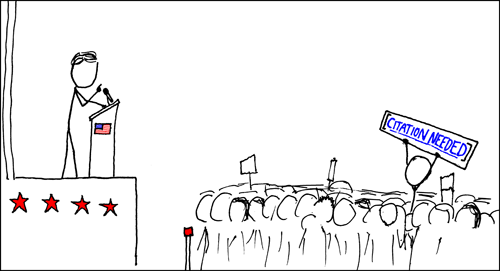
Yeah, I know this is only for an English class, and I don’t know how old you are, but really, you’re going to have to start using references and do serious research. That sort of essay won’t fly for long.
Of course, I am anally academic about essays and research and references, so maybe it’s different where you’re from. But still.
-
-
-
CommentAuthorRandomX2
- CommentTimeSep 7th 2009
Why search for accurate information when you can use Wikipedia? It’s what everyone else is doing!
-
-
-
CommentAuthorswenson
- CommentTimeSep 8th 2009
No, no, the secret is to use Wikipedia’s references. Find a really well-referenced page on Wikipedia (a current or recent Featured Article is your best bet for something with actually good references) and just steal all their sources.
-
-
-
CommentAuthorJeni
- CommentTimeSep 8th 2009
Hahahah, and do exactly the same for academic books. Find the books referenced, then claim them as primary resources.
Whoop!
-
1 to 16 of 16
